August 16, 2026
Is Your Rapid City Home at Risk From Galvanized or Polybutylene Pipes?
Pipe Repair & Repiping · Rapid City, SD
Is Your Rapid City Home at Risk From Galvanized or Polybutylene Pipes?
Quick Answer
If your Rapid City home was built between the 1960s and 1980s, there's a real chance it still has galvanized steel supply lines, and homes from the 80s and 90s sometimes have polybutylene pipe. Both are past their expected service life and prone to corrosion or sudden failure. Discolored water, reduced pressure, and visible corrosion at fittings are the main signs worth checking for.
Key Takeaways
- Galvanized steel pipe corrodes from the inside out, so problems often aren't visible until pressure drops or water discolors.
- Polybutylene pipe, common in the 80s and 90s, is prone to becoming brittle and failing at fittings over time.
- A whole-home repipe is a bigger job than a single repair, but it addresses the root problem instead of patching one failure at a time.
- Neither material needs to be replaced in a panic, but knowing your home's plumbing age helps you plan instead of react.
Why These Materials Are a Known Risk
Galvanized steel pipe was standard in homes built through the 1960s-80s. It's coated in zinc to resist corrosion, but that coating wears down internally over decades, and the exposed steel underneath rusts and narrows the pipe's interior. This happens gradually and invisibly until it either restricts flow enough to notice or corrodes through completely.
Polybutylene pipe, often gray or blue plastic tubing, was widely used in the 1980s and into the 90s as a cheaper alternative to copper. It later became known for degrading from the inside when exposed to chlorine in treated water, becoming brittle and prone to failure, especially at the fittings connecting sections together. Neither material is inherently dangerous to have in a home, but both are well past the point where failure risk starts climbing.
Signs Your Home May Have One of These Pipe Types
- Your home was built or last repiped between the 1960s and 1990s
- Visible pipe (in a basement or crawlspace) that looks dull gray metal (galvanized) or gray/blue plastic tubing (polybutylene)
- Discolored or rusty-looking water, especially after the house has sat unused for a while
- Noticeably reduced water pressure compared to what you'd expect
- Visible corrosion, rust stains, or small leaks at pipe fittings
Step-by-Step: How to Check Your Home's Pipe Material
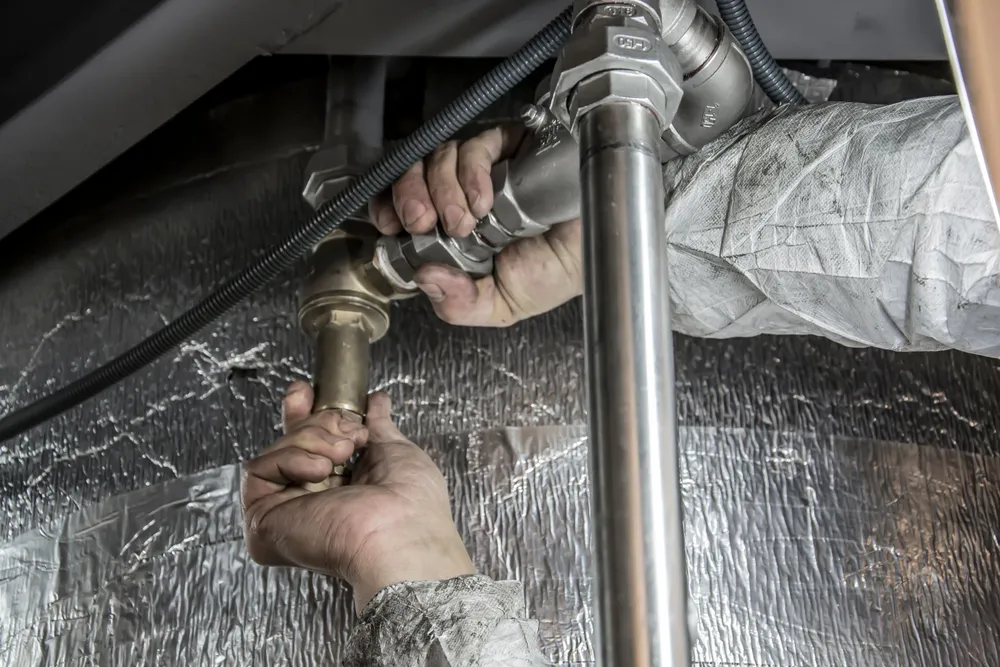
- Find an accessible section of pipe, usually in a basement, crawlspace, or utility closet near the water heater.
- Look at the color and material. Dull gray metal with visible threading at joints usually means galvanized steel. Gray or blue flexible plastic tubing usually means polybutylene.
- Check your home's build year or the date of your last known repipe, since that narrows down the likelihood significantly.
- Run a faucet after the house has been unused for a few hours and check for discoloration, which can indicate galvanized pipe corrosion.
- Note any areas with noticeably lower pressure than the rest of the house, which can point to a specific corroded section.
Safety Tips
Neither galvanized nor polybutylene pipe poses an immediate safety hazard just by being present. The real risk is sudden failure, which can cause water damage rather than a safety emergency. If you do have a section actively leaking or you find standing water near exposed pipe, treat it the same as any active leak: shut off the water to that section if possible and address it promptly.
When You Shouldn't Try This Yourself
- Replacing a section of galvanized or polybutylene pipe yourself without matching it correctly to the rest of the system
- Assessing whether a partial repair or full repipe makes more sense for your home
- Any repair involving pipe inside a finished wall or ceiling
When to Call a Professional
If you suspect your home has either material, it's worth having a plumber assess the full extent of it rather than reacting to a single failure. A partial repipe addresses just the section causing problems now, but if the whole system is the same age and material, more failures are likely down the road. A plumber can walk you through whether a partial repair or a whole-home repipe makes more sense for your situation.
What It Costs to Repair or Repipe
Cost depends heavily on scope: a single section repair is a much smaller job than a whole-home repipe, and access (finished walls versus an open basement or crawlspace) affects labor significantly too. We assess the actual condition and extent of the old pipe on-site and give you a flat-rate quote before any work begins.
Reducing Risk From Aging Pipe
- Have an accessible section inspected if you know or suspect your home has galvanized or polybutylene pipe
- Address reduced pressure or discolored water promptly rather than assuming it will resolve on its own
- Plan for a repipe proactively if your home's plumbing is approaching or past its expected service life, rather than waiting for a failure
- Ask about pipe material and age when buying an older home in Rapid City, since it affects both risk and future repipe cost
Frequently Asked Questions
Check an accessible section, usually in a basement or crawlspace. Galvanized pipe is dull gray metal with visible threaded joints. Home build year is also a strong indicator, especially for homes from the 1960s-80s.
It's not immediately dangerous just by being present, but it's known to become brittle and fail over time, particularly at fittings, which is why many homeowners choose to replace it proactively rather than wait for a failure.
It depends on the overall condition and age of the system. If the whole system is the same age and material, a single repair addresses today's problem but doesn't reduce the risk of the next one. A plumber can help you weigh the tradeoff.
This is a common sign of galvanized pipe corrosion. Rust particles settle when water sits still and get stirred up again when you first turn on a faucet.
Timeline varies with the size of the home and accessibility of the existing pipe, and a plumber can give you a realistic estimate once they've assessed the specific job.
Yes, but many buyers or their inspectors flag it during the sale process. Some homeowners choose to repipe proactively before listing to avoid it becoming a negotiating point.
Copper and PEX are the most common modern replacements, each with different cost and installation tradeoffs that a plumber can walk you through for your specific home.
Final Thoughts
Galvanized and polybutylene pipe don't fail on a predictable schedule, which is exactly why they're worth checking proactively rather than waiting for a leak to force the issue. Knowing what's actually running through your walls puts you in control of the timeline instead of reacting to an emergency.
Not Sure What's Running Through Your Walls?
We'll assess your home's pipe material and condition, then give you a flat-rate quote before any repair or repipe work begins.